
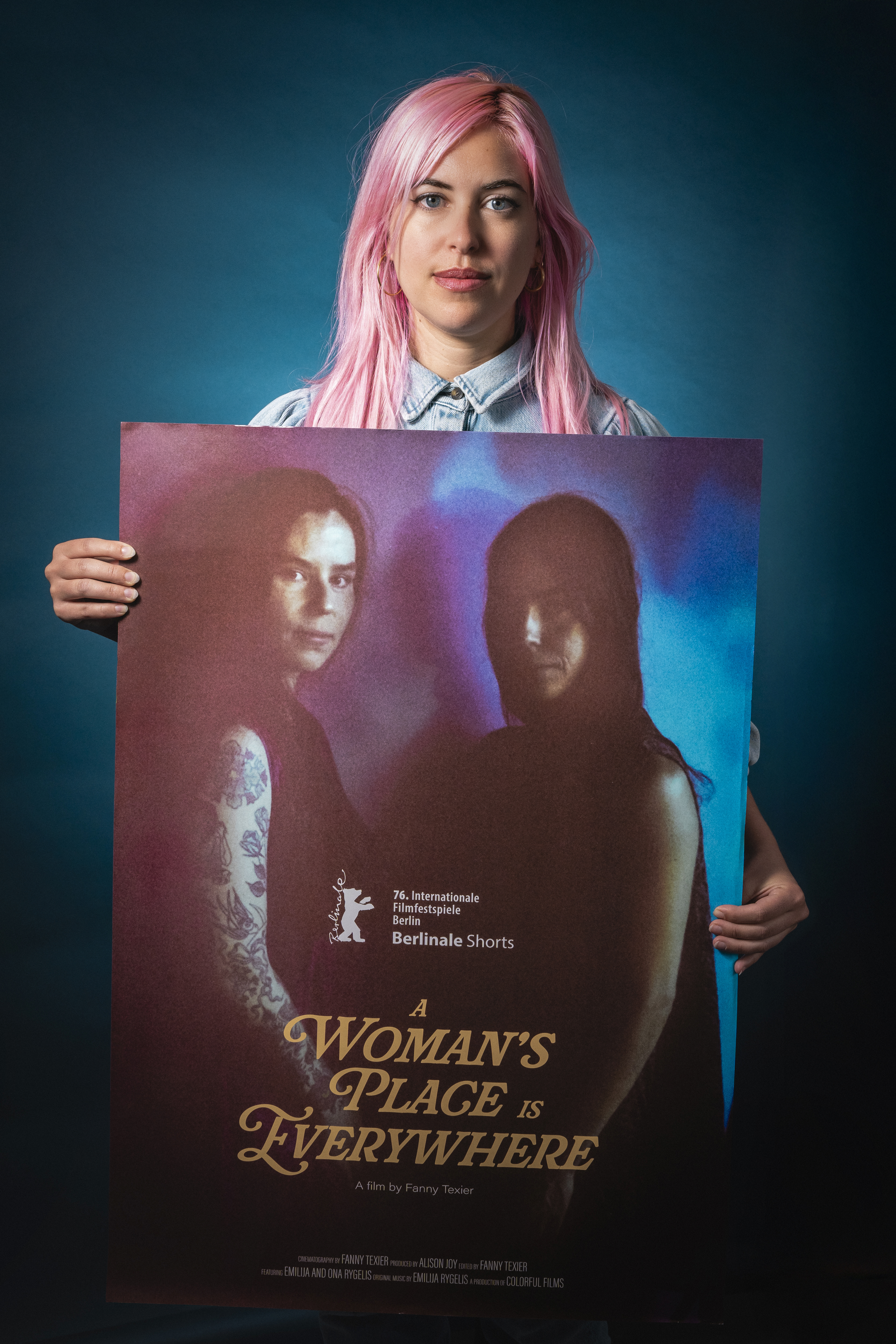
The documentary filmmaker Fanny Texier was born in Paris, France and is now based in Brooklyn. She studied journalism at the University of Montreal and has a master’s degree from the Sorbonne. As a feminist director, she is drawn to intimate and unusual stories, particularly those of women and individuals who are under-represented in traditional media. Her work has been presented by organisations including HBO, Netflix, “The New Yorker”, the BBC and Showtime. She recently participated in the Film at Lincoln Center Artists Academy and the newportFILM lab to develop her debut feature-length documentary.
What was your starting point for „A Woman’s Place Is Everywhere“?
I’m a close friend of Emilija and Ona. When their mother suddenly got sick and her health began to rapidly decline, I offered to document their lives as a way of preserving a moment that was slipping away. As soon as she passed, the sisters were served eviction papers for the loft they had grown up in. At that point, they invited me to continue filming, uncertain how much longer they could remain in their home.
I began documenting their lives with a purely observational approach, without knowing how long the eviction process would last or how it would end. Over three years, the film follows them through grief, pregnancy, and a legal battle. Through the process, I wanted to humanize those caught in a bureaucratic system and reveal the real human stories unfolding behind closed doors.
Do you have a favorite moment in the film? Which one and why this one in particular?
My favorite moment is the argument between the two sisters, when Ona tells Emilija she wants to move out of the loft because she is pregnant, and Emilija experiences the news as a betrayal.
What makes the scene so special to me is that the sisters completely forgot about the presence of my camera. They are raw, natural, and emotionally unfiltered with each other. Capturing that level of intimacy and truth is incredibly difficult in documentary filmmaking, and I feel grateful the sisters trusted me enough to keep this vulnerable scene in the film.
What do you like about the short form?
In this documentary, I’m condensing three years of the sisters’ lives into just twenty minutes, which required making sacrifices in the edit. I love that the short form allows audiences to enter the intimate world of people they may know nothing about, and still feel impacted by their story in a relatively brief amount of time.
*************************************************************************************
PRESS / REVIEWS / INTERVIEWS
„Fanny Texier’s A Woman’s Place Is Everywhere chronicles the growing gentrification of Williamsburg. Through glimpses at Emilija and Ona’s lives, it shows that the soul of a place is made up of its people.“
review in Film Ireland
„Dans ce magistral travail documentaire, la Française Fanny Texier parvient en quelques scènes à faire un portrait de famille ample, ambitieux et passionnant. Ce chaleureux et élégant récit de sororité se heurte à la violence sociale – ici celle d’une gentrification qui balaie la mémoire.“
review by Le Polyester
 Berlinale Shorts